
When a group of people with different personalities works toward a shared goal, conflict arises naturally and is hard to avoid. If you are tasked with managing those conflicts, recognizing the various types of conflict can help in addressing them effectively.
When you understand the kind of conflict you are dealing with, like interpersonal, intrapersonal, and communication conflicts, you can respond with clarity rather than react emotionally. This understanding of conflicts can turn potential friction into productive conversations.
Remember, not every conflict has the same root cause, and applying a one-size-fits-all solution often makes things worse.
Here are common workplace conflicts and strategies for resolving them.
7 types of workplace conflicts and how to handle them
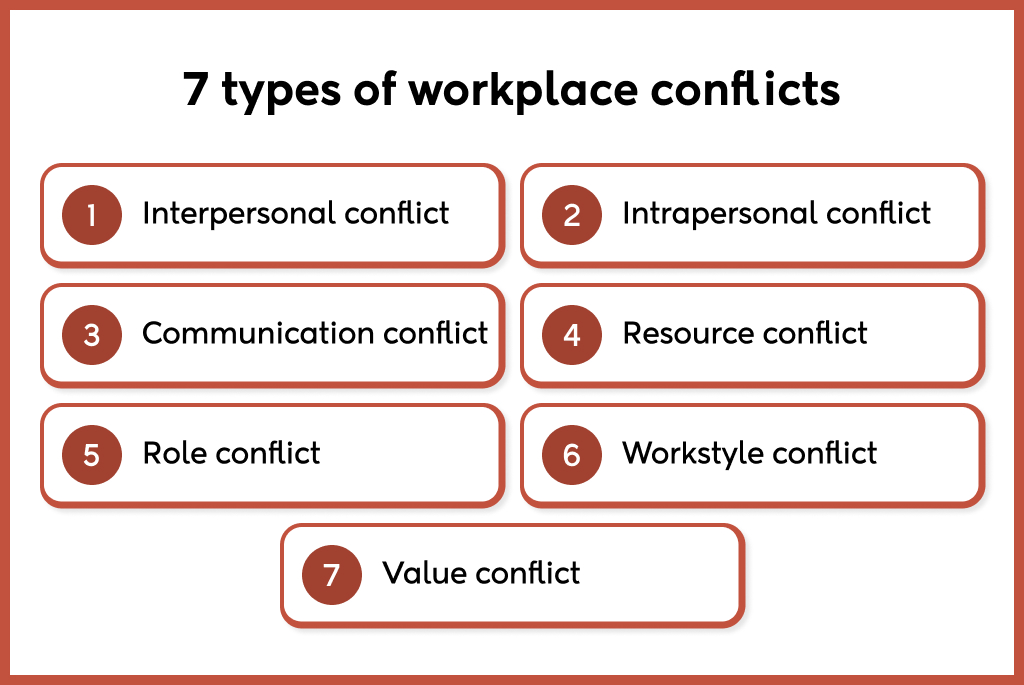
There are many types of conflict in the workplace that you will need to deal with. The most frequent and most challenging are:
1. Interpersonal conflict
Interpersonal conflict arises when two or more team members clash over differences in personality, work habits, or unresolved past issues. Sometimes it starts as a small misunderstanding, but if left unaddressed, it intensifies over time, leading to strained relationships and communication breakdowns. Passive-aggressive behavior, avoidance, or growing tension are often early signs of interpersonal conflict.
Resolution: To address interpersonal conflicts, promote open communication. Create space for both individuals to share their viewpoints and work toward understanding one another’s perspectives. Sometimes, role-reversal exercises are the solution you need. Ask each person to explain the situation from the other’s perspective. This helps them acknowledge the other person’s constraints, which often clarifies misunderstandings and leads to more realistic, workable solutions.
2. Intrapersonal conflict
Intrapersonal conflict occurs when an individual struggles internally due to conflicting thoughts, values, emotions, or goals. It often begins when a person feels torn between competing priorities or expectations. If left unaddressed, this internal tension can affect focus, decision-making, and overall performance at work. Signs of intrapersonal conflict may include indecision, stress, self-doubt, or withdrawal from tasks or discussions.
Resolution: To address intrapersonal conflict, support individuals through open conversations and guidance. Help them clarify priorities, set realistic goals, and break challenges into manageable steps. Providing access to mentoring and training resources can also help individuals gain clarity and confidence in navigating their intrapersonal conflicts.
3. Communication conflict
Communication conflict occurs when messages are unclear, incomplete, or misunderstood. It often arises from assumptions, inconsistent information, poorly chosen tone, or a lack of context. When communication breaks down, team members may walk away with different understandings of the same task, leading to unnecessary back-and-forth.
Resolution: To reduce communication conflict, encourage teams to document key decisions, expectations, and next steps in one shared place. Clear written communication helps reduce assumptions and ensures everyone is working from the same information. You can also ask team members to confirm understanding by restating key points or action items, helping catch misinterpretations early and prevent rework.
4. Resource conflict
Resource conflict occurs when teams or individuals compete for limited resources such as time, budget, tools, or people. Since every department works within fixed constraints, tension arises when multiple priorities demand the same resources. If not managed properly, these conflicts can slow progress, create frustration, and lead to misaligned priorities.
Resolution: To address resource conflict, use collaborative problem-solving, where team members work together to assess priorities and find practical solutions. By discussing constraints openly and agreeing on trade-offs as a group, teams can allocate resources more fairly and come up with creative ways to move work forward without unnecessary friction.
5. Role conflict
Role conflict occurs when there is confusion about ownership, decision-making authority, or task accountability within a team. This often shows up when multiple people assume responsibility for the same work or when no one does. Over time, this lack of clarity can slow progress, create friction, and cause important tasks to fall through the cracks.
Resolution: Use a RACI matrix to clarify roles and responsibilities. List tasks on one side and team members on the other, then assign who is Responsible, Accountable, Consulted, and Informed for each task. This removes role confusion, sets clear ownership, and helps everyone understand their responsibilities.
6. Workstyle conflict
Workstyle conflict happens when colleagues clash due to different approaches, personalities, or ways of getting things done, like one person preferring detailed planning while another dives straight in, one prefers working in a group, while another prefers working solo. If left unaddressed, these conflicts can lead to misunderstandings, frustration, and slower progress of the project. It’s a type of relationship conflict, stemming from differing habits, temperaments, and work preferences.
Resolution: Talk openly about how each person prefers to work and what helps them do their best. Acknowledge that different work styles can coexist, and agree on basic ways of working, such as deadlines, communication methods, and decision-making. Instead of imposing a single approach, find a balance that uses everyone’s strengths and keeps the work moving forward.
7. Value types of conflict in the workplace
Value conflict arises when individuals or groups have differing core values or beliefs that influence their perspectives and decision-making. These conflicts aren’t about tasks or work style. They stem from core values such as quality versus speed, transparency versus hierarchy, risk-taking versus caution, and work–life balance versus long hours.
Resolution: Encourage open discussion about what each person or team values and why. When values are clearly stated, it is easier to understand the reasons behind decisions rather than assuming resistance or ill intent. You can also prioritize one over another (e.g., speed vs. quality). Having agreed-upon guidelines helps teams make consistent decisions without repeated conflict.
Conclusion
Conflict is inevitable in the workplace, but understanding its different forms, such as interpersonal, communication, role, workstyle, and value conflicts, makes it easier to address them effectively. When you understand the root causes of conflict, you can prevent minor issues from escalating and turn disagreements into opportunities for improved collaboration and decision-making.














































No Comments