
Being a manager isn’t hard because the work is complicated. It’s hard because every decision, every conversation, and every habit quietly shapes how your team shows up. The best managers understand this. The rest learn when motivation drops, trust fades, and their highest performers quietly walk out.
The reality is simple: teams don’t fall apart overnight. They erode through small, repeated behaviors that seem harmless in the moment but slowly damage confidence, clarity, and culture. Before managers can become great leaders, they have to recognize the patterns that hold their teams back.
7 Key things you should avoid doing as a manager
Even well-intentioned managers fall into habits that slowly weaken their team’s clarity and performance. These behaviors may seem small in the moment, but over time, they shape the culture, the energy, and the results a team produces.
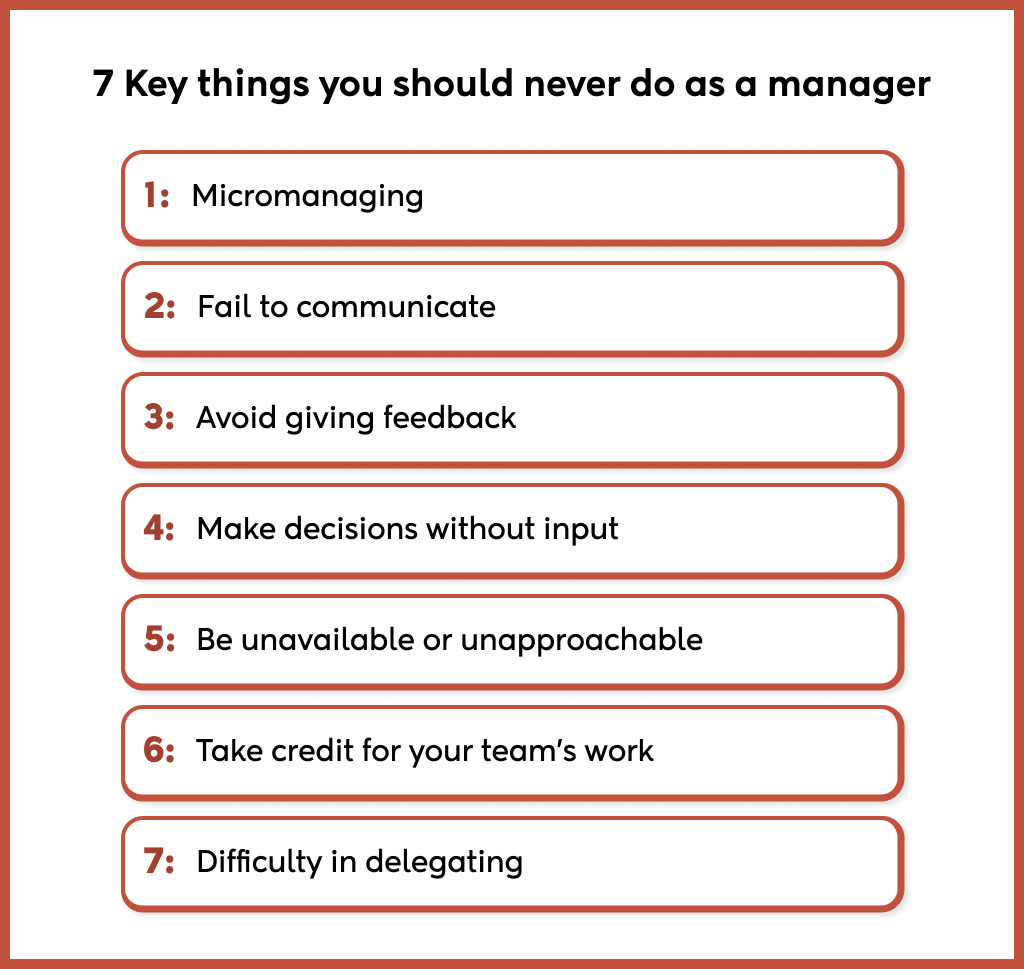
Here are seven management habits that damage trust, kill morale, and push your best employees to leave.
1. Micromanaging
A great manager never micromanages because they know constant oversight slowly reduces a team’s confidence. When every decision is questioned, and every step requires permission, people stop thinking for themselves. The work becomes heavier, motivation drops, and growth stalls.
Strong managers set direction, offer support when needed, and then trust their team to deliver. They allow room for independent decisions and see mistakes as part of learning, not a reason to tighten control. By stepping back, managers create space for skill development, ownership, creativity, and genuine accountability, and conditions that help people rise to their full potential.
Read more: Learn how to build trust in your team, what it matters, and what happens when you neglect it.
2. Fail to communicate
A great manager never fails to communicate, because silence creates confusion faster than any mistake. When expectations aren’t clear, teams start guessing about priorities, deadlines, and even their own performance. This uncertainty drains energy and leads to unnecessary rework.
Effective managers understand that communication isn’t a one-time job; it’s an ongoing practice of clarifying goals, inviting questions, and checking for alignment. They make sure people know the “what,” the “why,” and the “how” behind the work. By staying transparent and accessible, they remove ambiguity and give their teams the clarity and confidence needed to move forward with purpose.
3. Avoid giving feedback
A great manager never avoids giving feedback, because withholding it leaves people stuck in the dark about how they’re doing. Without guidance, employees can’t improve, and small issues quietly grow into bigger problems.
Effective managers understand that feedback is direction. They offer it regularly, with clarity and respect, so their teams know where they’re excelling and where they can adjust. And they don’t wait for annual reviews; they create ongoing, honest conversations that help people stay on track. By giving consistent feedback, great managers build confidence and sharpen the skills of their team.
4. Make decisions without input
A great manager never makes decisions in isolation, because they know the best insights often come from the people closest to the work. When managers choose a direction without asking for input, the team feels sidelined and less invested in the outcome. It also increases the risk of blind spots and things that could have been caught early with a simple conversation.
Effective managers invite perspectives, listen thoughtfully, and use that collective wisdom to make stronger, more grounded choices. By involving their team, they build ownership, trust, and a shared sense of responsibility for whatever comes next.
5. Be unavailable or unapproachable
A great manager is never unavailable or unapproachable, because distance creates a silent barrier that holds teams back. When leaders seem too busy, too distracted, or too hard to talk to, employees hesitate to share ideas, raise concerns, or ask for help.
Effective managers make themselves accessible, not by being on call 24/7, but by being genuinely present when their team needs guidance. They listen without judgment, welcome questions, and create a safe space for honest conversations. Their openness builds trust, strengthens relationships, and ensures no one feels alone in their work.
6. Take credit for your team’s work
A great manager never takes credit for their team’s work, because recognition keeps people motivated, creative, and committed. When a manager steps into the spotlight alone, it sends a clear message: your effort doesn’t matter. Over time, employees stop sharing ideas, stop taking initiative, and start doing the bare minimum.
Effective managers give credit generously and specifically. They highlight contributions, celebrate wins publicly, and make sure the right people get the spotlight. When teams feel seen, they show up stronger, collaborate better, and take pride in every outcome.
7. Difficulty in delegating
A great manager never struggles with delegation, because holding on to everything themselves only slows the team down. When managers can’t let go, they unintentionally signal that they don’t trust their people and turn every task into a bottleneck and every project into a source of stress. Employees feel underused and unsure of their own capabilities.
Effective managers delegate with clarity and confidence. They choose the right people, define the outcome, provide support, and then step back. Delegation isn’t about assigning work; it’s about growing skills, building ownership, and creating space for higher-impact thinking. When done well, everyone moves faster and feels more empowered.
Conclusion
When managers communicate openly, delegate confidently, and lead with trust, teams feel supported, motivated, and ready to perform at their best. But when these habits slip, even strong teams slowly lose clarity, confidence, and commitment. Fixing these behaviors creates a healthier workplace where people grow instead of burning out. Ultimately, small leadership choices determine whether teams thrive or drift.




























































No Comments